
The travel industry continues to evolve as travelers use digital platforms to search for flights, compare hotel prices, and plan their journeys. For travel agencies, startups, and entrepreneurs, an online booking website can create opportunities to reach customers and streamline operations.
Building a successful travel portal requires more than an attractive design. You need suitable technology, reliable supplier integrations, secure payment options, and an easy-to-use booking process. This guide covers the features, development steps, API integrations, and cost considerations involved in building a travel booking website in 2026.
1. What Is a Travel Booking Website?
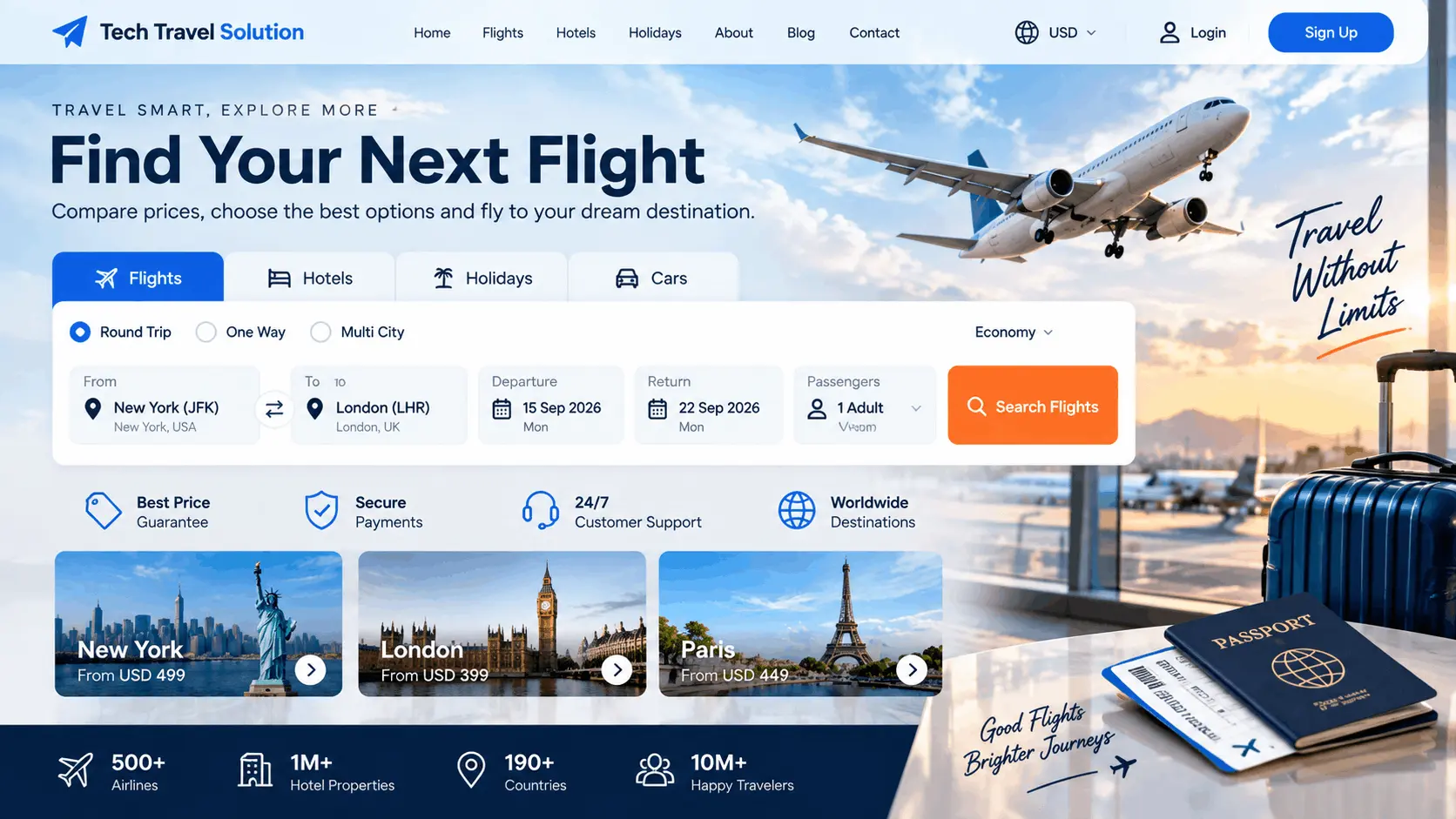
A travel booking website is an online platform that allows users to search, compare, and book travel-related services. Depending on the business model and supplier agreements, it may support flights, hotels, holiday packages, car rentals, and activities.
For example, when a customer searches for a flight from New York to London, a connected supplier can return available options and fares. The website may then support selection, price verification, and booking if those functions are included in its integration.
2. Choose the Right Type of Travel Booking Website
| Portal type | Who it serves | Typical capabilities |
|---|---|---|
| B2C | Individual travelers | Direct search, booking, and payment |
| B2B | Travel agents and partners | Agent accounts, credit limits, commissions, reports |
| B2B2C | Partners and their customers | Partner management and customer-facing booking |
| White label | Businesses using an existing platform | Branding and configurable features |
Choose a model based on your audience, operational needs, available suppliers, and budget.
3. Essential Features of a Travel Booking Website
Advanced search
Let users filter by destination, travel dates, passengers, cabin class, or hotel preferences.
Availability and pricing
Retrieve supplier results and recheck prices and availability before confirmation.
Secure payments
Support appropriate payment methods, failed-payment handling, and applicable security requirements.
Booking management
Provide booking details, notifications, and supported change or cancellation workflows.
Other useful features include a mobile-responsive design, user accounts, an admin dashboard, multi-currency support where appropriate, and email or SMS notifications.
4. Step-by-Step Guide to Building a Travel Booking Website
Define your business requirements
Decide which services to sell, who your customers are, and whether you need a B2B, B2C, or white-label solution.
Choose your technology
Select frontend and backend technologies, a database, hosting infrastructure, and appropriate security controls.
Design the booking experience
Create clear navigation, search forms, pricing displays, and a straightforward checkout process.
Integrate travel suppliers
Connect APIs that provide the coverage and functionality your business requires. Confirm access and commercial terms first.
Add payment functionality
Implement suitable payment methods and handle successful, failed, and interrupted transactions safely.
Test the entire journey
Test search, fare changes, availability, booking confirmation, mobile usability, and security.
Launch and maintain
Deploy the website, monitor performance, fix issues, and keep integrations and dependencies updated.
5. What Is Travel API Integration?
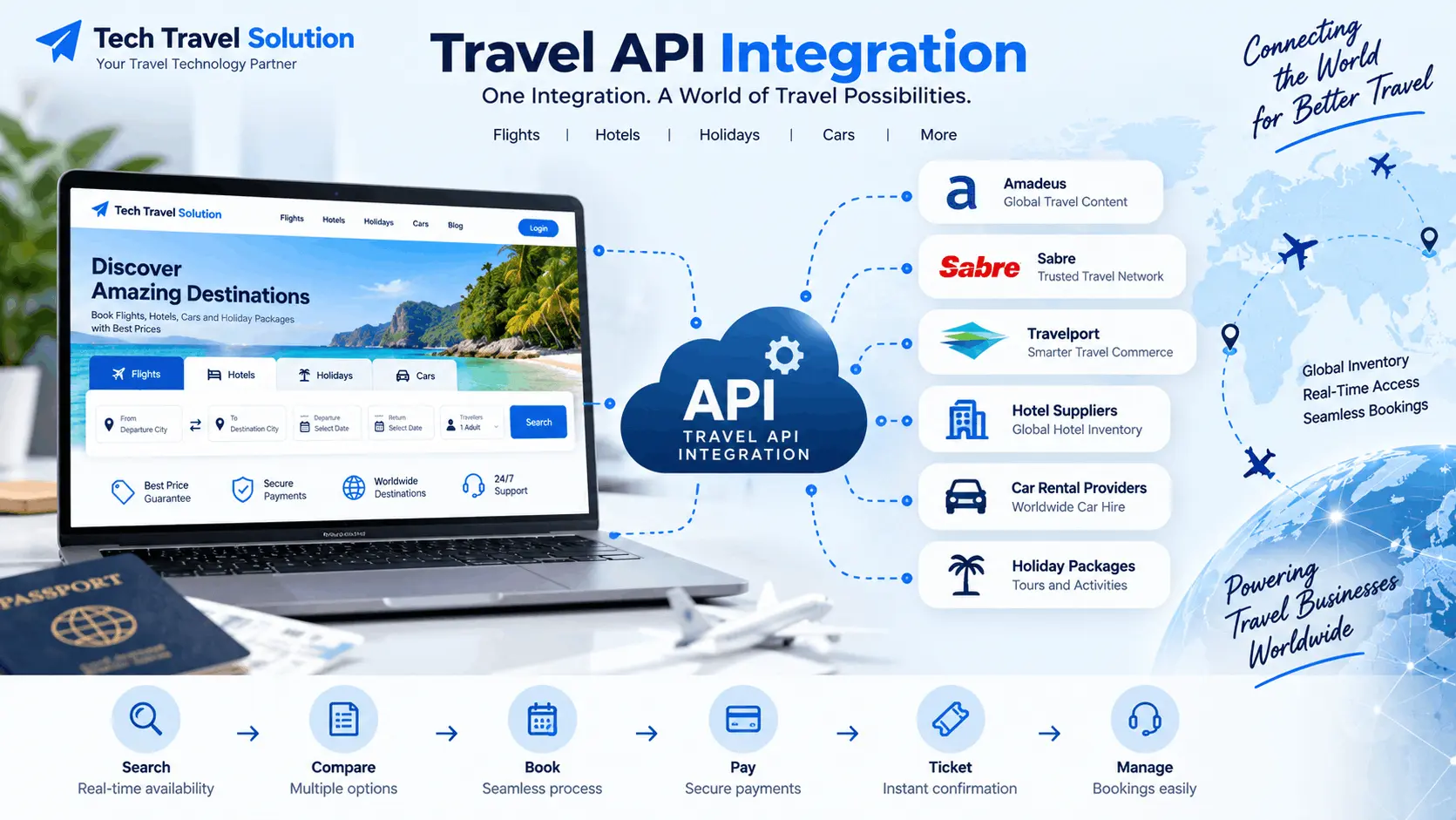
An application programming interface (API) allows software systems to exchange information. A flight API can connect a website to an airline or travel technology provider for search results and fare information. Depending on the provider and agreement, additional functions may include pricing, booking, ticketing, and booking management.
Travel technology providers include Amadeus, Sabre, and Travelport. Evaluate each option based on airline coverage, available functions, technical requirements, commercial terms, and target markets.
6. How Much Does It Cost to Build a Travel Booking Website?
Costs vary according to the scope and complexity of the project. A simple branded portal and a fully customized platform with multiple supplier integrations will have different budgets.
| Cost factor | What it includes |
|---|---|
| Design and development | Interface, backend, booking flows, and admin tools |
| Supplier integration | API access, implementation, and provider fees |
| Payments | Gateway integration and transaction-related charges |
| Infrastructure | Hosting, monitoring, and security |
| Maintenance | Updates, bug fixes, and ongoing support |
Define the required features and obtain a detailed quotation before committing to a development approach.
7. Common Challenges in Travel Website Development
Changing fares: Prices may change between search and checkout. Revalidate the fare before confirming the booking.
Supplier differences: APIs may have different response formats, coverage, and access restrictions. Design integrations around documented capabilities.
Payment failures: Handle retries and reconciliation carefully to avoid duplicate transactions or inconsistent booking states.
Performance and security: Optimize slow workflows, protect customer information, and test the site regularly.
8. Explore Tech Travel Solution
Tech Travel Solution provides travel technology services. Explore its travel portal development and API integration offerings, and discuss your requirements, supplier access, budget, and project scope before starting development.
Ready to Build Your Travel Booking Website?
Explore travel website development solutions and discuss your project requirements with Tech Travel Solution.
Visit Tech Travel Solution9. Frequently Asked Questions
Conclusion
Building a travel booking website in 2026 requires careful planning, suitable technology, reliable supplier integrations, and an intuitive booking experience. Start by defining your audience and business model, then select the right features and suppliers. Thorough testing and ongoing maintenance will help you operate a dependable travel platform.


